

 Available 24/7



Brain injuries are categorized by their cause: acquired or traumatic. There are both key differences and overlaps between these types of brain injury.
Our experienced Columbia personal injury lawyers at Shealey Law Firm explain the key differences between TBI vs. ABI.
Understanding Acquired Brain Injury Vs. Traumatic Brain Injury
Brain injuries are categorized by when and how they occur. When an injury develops after birth, it is acquired. An acquired brain injury may be traumatic or non-traumatic, depending on whether it results from force or other factors.
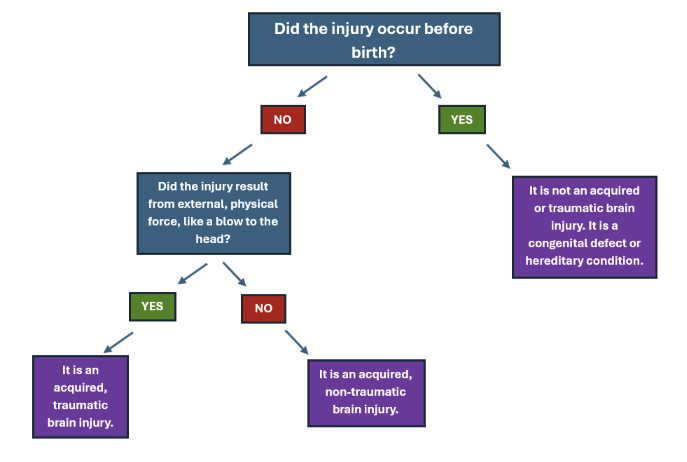
External force is what differentiates ABI vs. TBI. Traumatic brain injury is a type of acquired brain injury. While all traumatic brain injuries are acquired because they appear after birth, not all acquired brain injuries are traumatic. Acquired injuries can have both traumatic and non-traumatic causes.
Chart – Examples of Acquired and Traumatic Brain Injury
| Example of Injury | Acquired, Non-Traumatic | Acquired, Traumatic |
| Car accident | ✔ | |
| Slip and fall | ✔ | |
| Toxic exposure | ✔ | |
| Infection | ✔ | |
| Cardiac arrest | ✔ | |
| Near drowning | ✔ | |
| Aneurysm | ✔ | |
| Sports accident | ✔ | |
| Violence with a weapon | ✔ | |
| Brain tumor | ✔ | |
| Toxic buildup from organ failure | ✔ | |
| Stroke | ✔ | |
| Blast injury | ✔ | |
| Falling objects and debris | ✔ |
What Is a Traumatic Brain Injury (TBI)?
A traumatic brain injury is harm to the brain that results from external force. TBI results from something striking the head or from forces shaking the brain, causing injury. Falls and car accidents are two common causes of traumatic brain injury.
For a brain injury to be traumatic, it’s not required that something strike the brain. Strong force, such as from a car accident, can throw the body, or an explosion can cause shock waves that damage tissue without external impact.
What Is an Acquired Brain Injury (ABI)?
An acquired brain injury (ABI) is a brain injury that occurs after birth. To acquire something means to obtain or develop it. A person is not born with an acquired brain injury.
ABI can result from external or internal factors like lack of oxygen, chemical exposure, strokes, tumors, or other health conditions.
An acquired brain injury is not:
- Hereditary (passed on by a parent)
- Congenital (occurring before birth)
- Degenerative (the result of deterioration)
Is a birth injury a traumatic brain injury?
It depends. Traumatic brain injury can occur during childbirth, such as from the force of instruments. But many birth injuries result from non-traumatic causes like oxygen deprivation.
How the Causes and Symptoms of ABI and TBI Differ
Because TBIs are a subset of ABIs, the symptoms may overlap.
Traumatic brain injury symptoms may be visible, such as bleeding or loss of consciousness. The signs can also be subtle, such as confusion, headache, or blurred vision. Symptoms may be physical, behavioral, cognitive, or emotional.
Symptoms of acquired brain injury can vary depending on the type of injury sustained. These symptoms may appear immediately or may develop and worsen over time. Individuals may experience physical, behavioral, cognitive, and emotional changes similar to those seen in TBI. Additionally, changes in vital signs, pain, seizures, and alterations in breathing can indicate non-traumatic, acquired brain injury.
Other classifications
In addition to acquired and traumatic, brain injuries are classified by whether they are open or closed and by whether the injury is primary or secondary.
Can You File a Personal Injury Claim for Either Type?
Yes, it is possible to file a personal injury claim for both a traumatic and a non-traumatic acquired brain injury. The question is not the exact nature of the injury but rather how it occurred. When we think of personal injury lawsuits, we usually think of car accidents, slip and falls, and other incidents that cause traumatic brain injury.
However, you can file a claim for a non-traumatic, acquired brain injury when it results from a personal injury. Examples include exposure to a dangerous chemical that causes toxic inhalation or a medical mistake that results in oxygen deprivation or cardiac arrest. In these cases, individuals may have a valid claim.
Common Scenarios That Lead to Brain Injury Claims in Columbia
Scenarios that can lead to brain injury claims in Columbia, SC, include:
- Car accidents
- Truck crashes
- Motorcycle accidents
- Slip and fall
- Medical malpractice
- Animal attacks
- Police brutality, excessive force
- Prison abuse
If you have suffered a brain injury, you may have the right to compensation.
How a Columbia Personal Injury Lawyer Can Help You Recover Compensation
A Columbia personal injury lawyer can evaluate your injury, review liability for personal injury, and determine if you qualify for compensation. An attorney can pursue your claim.
At Shealey Law Firm, we understand acquired brain injury vs. traumatic brain injury. We know how brain injury claims can be complex. Our experienced lawyers handle everything and aggressively pursue your case. Call or message us now.